How to Choose the Right TWS OEM Service Provider for Your Brand
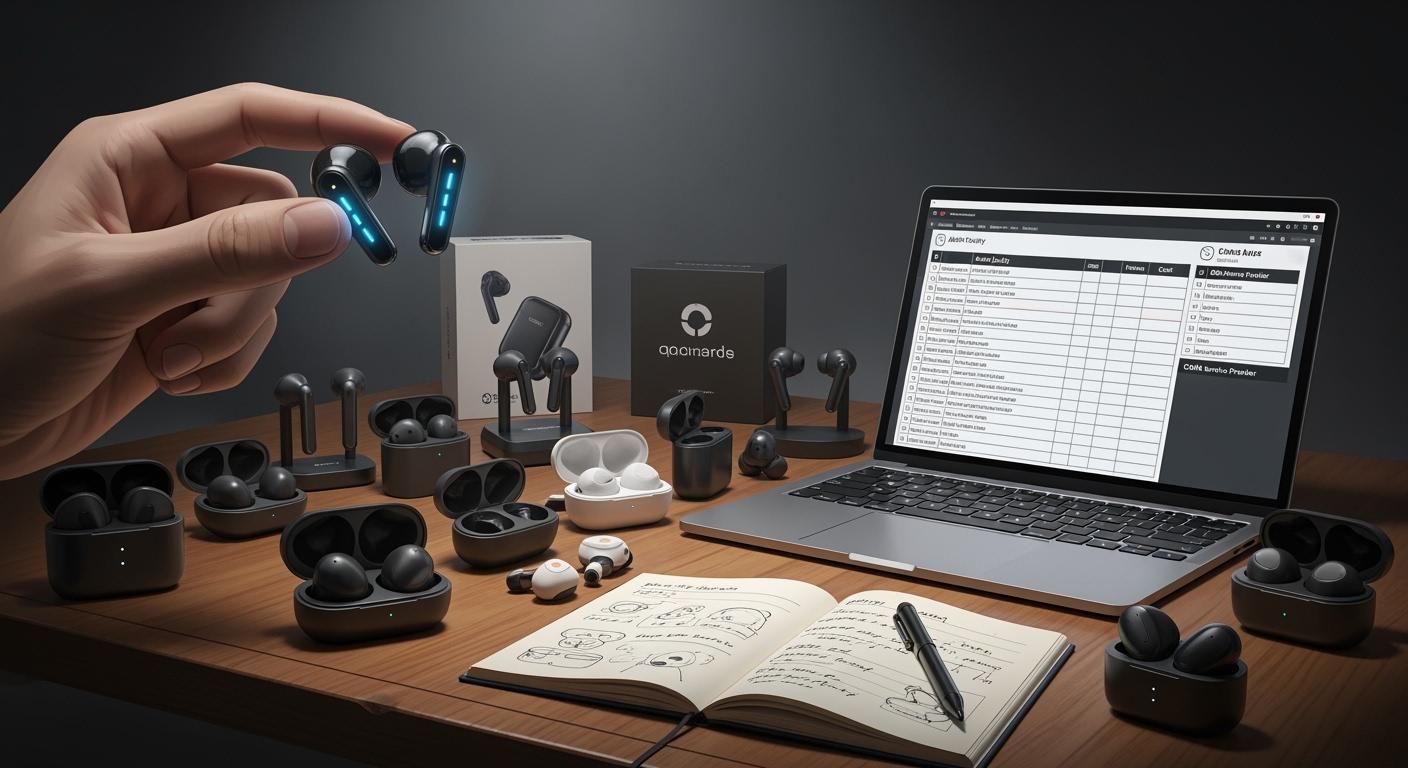
You want to pick a TWS OEM service that helps your brand stand out. Find one with good technical skills and important certifications like FCC, CE, or UKCA. Trustworthy providers follow strict quality rules and work quickly. Check how much they can make and if they have done well before. Great earbuds need these key things. This guide helps you choose wisely for your business.
Key Takeaways
-
Make sure your earbuds have important certifications like FCC, CE, and UKCA. These show the earbuds are safe and legal. - Pick manufacturers who check quality often. This helps stop problems and makes the product work well. - Check how many products they can make and how fast. This helps you get your orders on time and fill big orders. - Choose OEM partners who have done a good job before. They should also help your brand do well. - Always check everything carefully. Test samples and make sure they can really make the products. This keeps your money safe.
Key Criteria for TWS OEM Service Selection

Certifications and Compliance
You must check certifications before picking a TWS OEM service. Certifications show the earbuds are safe and legal in each country. FCC is needed in the United States. CE is needed in the European Union. UKCA is needed in the United Kingdom. These marks mean the earbuds follow rules for radio signals, electrical safety, and dangerous materials. Furthermore, BSCI certification is essential to ensure the factory follows ethical labor practices and social responsibility standards, while GRS certification verifies the use of recycled materials and tracks environmental impact throughout the supply chain.
Here is a table that lists the main certifications and what they mean for OEM wireless earbuds:
| Region/Country | Mandatory Certification | Key Requirements |
|---|---|---|
| European Union | CE Marking + RoHS | EMC, LVD, and Restriction of Hazardous Substances directives |
| United States | FCC Part 15 | Radio frequency and digital device compliance for wireless earbuds |
| United Kingdom | UKCA Marking | Post-Brexit standard; applies to most CE-regulated products |
| Japan | TELEC/PSE | Radio Law compliance for Bluetooth (MIC/TELEC) and Denan Law safety standards for lithium batteries (PSE) |
| Korea | KC | Conformity assessment for radio equipment (RF) and safety certification for lithium batteries (KC-Safety) |
Extra certifications like RoHS and REACH help with material safety. WEEE helps with recycling. These certifications keep you out of legal trouble and make selling easier. The UKCA mark is now needed for most products in Great Britain. It shows the earbuds follow UK rules for radio and electrical safety.
Tip: Always ask the manufacturer to show proof of certifications before you order samples or start making products.
Quality Control Processes
Quality control is very important for any oem. You want earbuds that have few defects and work well. The best manufacturers use strict tests and check many times. They have teams that look at every step. This keeps defect rates low and stops warranty problems.
Here is a table that shows how quality control steps affect defect rates:
| Quality Control Measure | Impact on Defect Rate |
|---|---|
| Rigorous testing protocols | Minimizes defects |
| Multi-stage inspections | Ensures high quality |
| Dedicated quality control teams | Thorough assessments |
| Compliance with international standards | Reduces warranty claims |
Ask about the manufacturer’s quality control system. Testing in many steps and strict checks keeps defect rates under 0.5%. This means your earbuds will work well and last longer.
-
Look for these things in a quality control process:
-
Tests for sound and battery safety
-
Checks at every stage
-
Teams focused on quality
-
Following global standards
-
Production Capacity and Lead Time
Production capacity and lead time are important when launching new true wireless stereo products. The best OEM factories have yield rates over 98%. They can handle big orders and keep lead times short. Most factories need 4-6 weeks from design to mass production. If you order 1000 pairs, you get samples in 7–10 days and mass production in 25–30 days.
| Minimum Order Quantity | Sample Lead Time | Mass Production Lead Time |
|---|---|---|
| 1000 pairs | 7–10 days | 25–30 days |
| Lead Time Range | Description |
|---|---|
| 20-40 days | Depends on order size and customization |
High production capacity means you get products faster. Good OEM services help you beat competitors. Always ask about the factory’s daily output and how fast they deliver.
Note: Fast lead times and high yield rates are signs of a good oem.
Materials and Technical Expertise
Materials and technical skills affect how your earbuds perform. Advanced materials like polymer soft-pack batteries make battery life better and safer. These batteries can be square or round. Power management chips help with charging and protect the earbuds. These features improve sound and user experience.
Check if the oem uses the newest materials and has strong firmware development capability. This lets them add features like anc and active noise cancellation. These features help your earbuds stand out.
-
Key features to look for:
-
Polymer batteries for longer playtime
-
Power management chips for safety
-
Support for anc and active noise cancellation
-
High-quality audio drivers
-
Track Record and Support
A good track record means the OEM can deliver quality products on time. Ask for case studies or references. Look for manufacturers with proven partnerships and good support. They should help with technical issues, firmware updates, and new features like anc.
Here is a list of features that show good support:
-
Quick answers to questions
-
Help with firmware development capability
-
Advice on adding anc and active noise cancellation
-
Support for audio tuning and quality control
Callout: Pick a manufacturer that gives ongoing support and has a history of successful oem wireless earbuds launches.
By focusing on certifications, quality control, production capacity, materials, technical skills, and support, you can pick the best TWS OEM service for your brand.
OEM Evaluation Steps
Verify Certifications
You should check certifications before trusting any OEM Project. First, look at the business license of the earbud maker. Make sure the address matches where they make the earbuds. Ask for videos showing how they make the earbuds. This lets you see their quality control. Order samples and test them to see if they meet your standards. Find audit reports from trusted agencies. Talk to past buyers to check if they got the right papers and help.
-
Check legal and regulatory details
-
Audit production abilities
-
Validate samples
-
Trace third-party audits
-
Confirm references
Tip: Always ask for certifications and check them with official sources. This keeps your brand safe and makes sure your earbuds follow the law.
Audit Manufacturing Capabilities
You need to check the oem/odm abilities of the earbud maker. On-site audits let you visit the factory and meet workers. Remote audits use video calls and online papers. Both ways help you check quality and supply chain control. On-site audits show more, but cost more money. Remote audits are easier and cost less.
| Aspect | On-Site Audits | Remote Audits |
|---|---|---|
| Inspection Type | Physical check of the factory | Virtual check with video calls |
| Interaction with Staff | Meet employees in person | Talk to the staff through video |
| Assessment Depth | Deep look at processes | Surface look at processes |
| Flexibility | Less flexible, needs travel | More flexible, easy to schedule |
| Cost | Higher because of travel | Lower uses technology |
| Real-time Feedback | Get feedback right away | Feedback may be delayed |
| Documentation Verification | See papers in person | Use digital papers |
| Overall Effectiveness | Full understanding of abilities | May miss important details |
Request and Test Samples
You should ask for samples from the OEM. Check samples for sound, battery, and special features. Test them to see if they fit your needs. Look at the maker’s history and quality systems. Make sure they have quality management certifications. Use four steps: ask for certifications, audit abilities, test samples, and check references.
-
Check factory abilities and setup
-
Look for experience in TWS production
-
Make sure quality control is strong
-
Confirm needed certifications
-
Inspect samples and check references
Assess Real-World Performance
You need to check how the earbuds work in real life. Look at sound, battery, and audio features. Compare passive and active noise cancellation. See if battery life is good enough. Check what buyers want for sound and features.
| Metric | Description |
|---|---|
| Technology Segmentation | Shows the difference between passive and active noise cancellation for different buyers. |
| Battery Life | Affects buying choices; some models play under 10 hours, others over 20 hours. |
| Consumer Expectations | Price levels set what buyers expect, from basic sound in cheap models to advanced features in expensive ones. |
Review Communication and Support
You need to check the service and support from the OEM. Good earbud makers answer fast and clearly. After-sales support helps improve sound and builds trust. Reliable lead times help you grow your business. Local tech support makes relationships stronger and improves product quality.
-
Local tech support helps sound quality
-
Good teamwork builds strong relationships
-
Sound quality builds trust
-
Fast answers matter more than low prices
-
Reliable lead times help you grow
Note: Strong after-sales support and clear answers are important for long-term success with your oem partner.
Risk Management in TWS OEM Partnerships

Due Diligence
You must check everything before picking an OEM. First, confirm build-to-spec details like driver impedance and battery capacity. Also, check the ANC depth. Test the earbuds for 72 hours to see how they work. Look at the firmware for Bluetooth disconnects. Make sure over-the-air updates work well. Each earbud should have a unique ID. The ID must match its firmware and calibration data. Always ask for proof of certificates. Review the firmware setup and ask for a demo of the rollback features. Audit the supplier to see if they use two sources for key parts. Check first-pass yield rates from past buyers. Get ownership of the firmware source code after you pay. Environmental stress tests with telemetry logging help find hidden issues.
A strong OEM will show they are stable and have a good name. Use these benchmarks to compare different makers:
| Metric | Benchmark | Why It Matters |
|---|---|---|
| On-Time Delivery Rate | >99.8% | Shows they deliver on time |
| Response Time | <4 hours | Proves they answer quickly |
| Reorder Rate | >75% | Means customers trust and return |
| Online Revenue | $5000,000+ | Shows market trust and steady business |
Look for ISO 9001:2015, BSCI, GRS, FCC, CE, RoHS, and Bluetooth SIG certifications to check quality and compliance.
IP Protection
You must keep your brand’s ideas and designs safe. Sign strong contracts with the oem to protect your audio technology. Make sure the manufacturer promises to keep your firmware and product designs private. Ask for proof that they will not share your audio features or quality control methods.
Validation Trials
Test the OEM’s products in real life. Check audio performance and battery life—test quality under stress. Run environmental tests to see if the earbuds work in different conditions. Use these trials to make sure the manufacturer meets your standards for quality and audio features.
Contingency Planning
Get ready for supply chain problems before they happen. Use these strategies to keep your business safe:
| Strategy | Description |
|---|---|
| Proactive Risk Identification | Spot risks early to keep operations running |
| Financial Health Checks | Review supplier finances to avoid delays |
| Geographical Diversification | Source from different places to avoid local disruptions |
| Robust Contractual Frameworks | Use strong contracts to protect your IP and ensure compliance |
| Continuous Monitoring | Watch supplier health to catch problems fast |
| Supply Chain Visibility Tools | Use tools to track and manage your supply chain |
Tip: Always plan for surprises. Good risk management keeps your brand strong and your audio products reliable.
You can pick the best TWS OEM service if you follow the easy steps. First, check certifications to make sure the earbuds are safe. Next, look at how the company checks quality. Then, see how many earbuds they can make. Also, find out if they have helped other brands before. Pay attention to these main things:
-
Certifications and compliance
-
Strong quality control
-
Reliable production capacity
-
Good partnership support
Begin checking your options now. You will have a strong brand with good partners and great products.
FAQ
What certifications should you check for TWS OEM providers?
You should look for BSCI, GRS, FCC, CE, FDA, UKCA, RoHS, UL, and Bluetooth SIG certifications. These show the earbuds meet safety and legal standards in different regions.
Tip: Always ask for proof before you place an order.
How can you test the quality of OEM earbuds?
You can request samples and run tests for sound, battery life, and features. Check for defects and ask about the factory’s quality control steps.
-
Test the sound and battery
-
Inspect for defects
Why does production capacity matter for your brand?
Production capacity shows how many earbuds the factory can make. High capacity helps you launch products faster and meet big orders.
| Capacity | Benefit |
|---|---|
| High | Faster launch |
| Low | Possible delays |
What support should you expect from a TWS OEM partner?
You should get quick answers, help with firmware, and advice on adding features. Good support builds trust and helps your brand grow.
Note: Reliable support matters more than low prices.
How do you protect your brand’s IP with an OEM?
You can sign strong contracts and ask the OEM to keep your designs private. Always check for proof of IP protection.
-
Use contracts
-
Ask for privacy guarantees