How to Choose the Right Headphone OEM Manufacturer for Your Brand
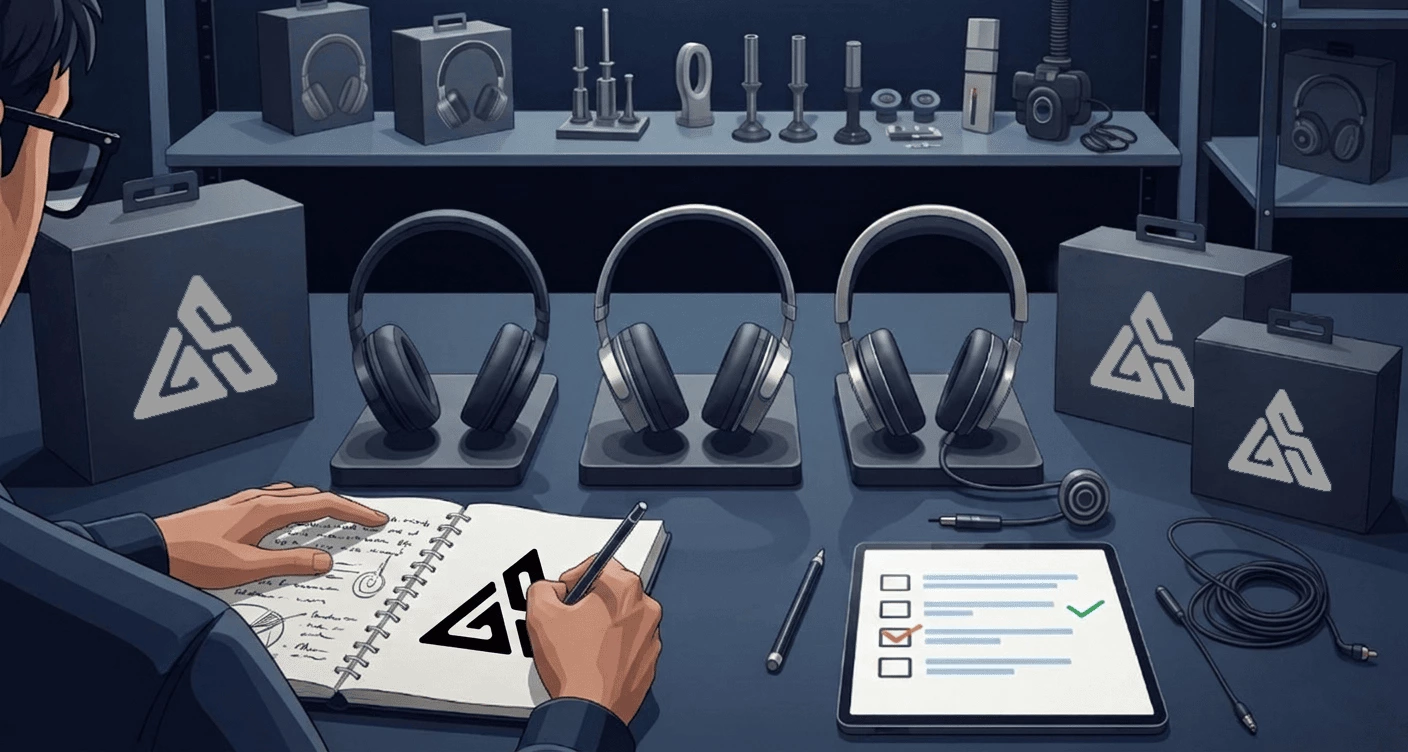
You need to select a headphone oem manufacturer that aligns with your brand vision. Quality matters when you want your headphone to stand out in a competitive market. Customization options help you create a unique product that reflects your brand identity. Evaluating expertise gives you confidence in choosing an oem headphone manufacturer that delivers reliability and innovation. Focus on clear criteria and practical steps to make a confident decision.
Key Takeaways
-
Assess the expertise and track record of potential manufacturers to ensure they meet your quality standards.
-
Review the manufacturer's portfolio to understand their capabilities and the types of headphones they can produce.
-
Prioritize quality control by checking for certifications like ISO 9001, CE, and RoHS to ensure compliance with industry standards.
-
Explore customization options to create unique headphone designs that reflect your brand identity and appeal to your target market.
-
Understand minimum order quantities and pricing strategies to align your production needs with your business goals.
Evaluating Headphone OEM Manufacturer
Expertise and Track Record
You must assess the expertise and experience of any headphone oem manufacturer before making a decision. Brands often use clear criteria to evaluate manufacturers. The table below shows the most common factors you should consider:
| Criteria | Description |
|---|---|
| Quality | Assessment of quality control processes and product standards. |
| Experience | Evaluation of the manufacturer's history and expertise in the headphone industry. |
| Capabilities | Analysis of product development capabilities and customization options. |
| Cost | Consideration of pricing structures and overall cost-effectiveness. |
| Location | Importance of the manufacturer's geographical location in relation to logistics and supply chain. |
You should look for a manufacturer with a proven track record in oem manufacturing. Check their years in business and their reputation in the industry. Many brands choose partners with deep experience in producing high-quality headphones. You gain confidence when you see evidence of successful collaborations and consistent product quality. Evaluate their production capabilities and ability to deliver innovative features like anc or active noise cancellation. You want a partner who can handle complex product development capabilities and adapt to new trends.
Portfolio and Past Projects
Reviewing the portfolio of an oem headphone manufacturer gives you insight into their capabilities and design strengths. You should examine the types of headphones they have produced. The table below highlights common headphone designs and features showcased in manufacturer portfolios:
| Type of Earphone | Advantages | Limitations |
|---|---|---|
| In-Ear Monitors (IEMs) | Excellent sound quality, passive noise isolation, customizable fit | May cause ear fatigue, higher-end models can be expensive |
| True Wireless Stereo (TWS) | No wires, compact charging cases, advanced features | Limited battery life, easier to lose |
| Noise-Canceling Earphones | Reduces background noise, enhances audio clarity | Higher power consumption, may create pressure sensation |
| Fitness Earphones | Sweat-resistant, ergonomic design | Limited audio fidelity, bulkier design |
| Wireless Earphones (Bluetooth/NFC) | Convenient wireless connectivity, versatile use | Requires regular charging, potential latency |
| Wired Earphones | Reliable and cost-effective option | N/A |
You should check if the oem headphone factory specializes in the types of headphones you want for your brand. Look for portfolios that include advanced features such as bluetooth connectivity and active noise cancellation. You gain valuable information by studying past projects and client testimonials. This step helps you understand the manufacturer’s product development capabilities and their ability to deliver custom solutions.
Tip: Ask for sample products and detailed case studies. You can verify the manufacturer’s expertise and experience by examining real-world results.
Quality Control and Standards
Quality control measures play a crucial role when choosing an oem headphone manufacturer. You must ensure the manufacturer follows strict quality standards and holds relevant certifications. Many reputable factories implement ISO 9001 quality management systems and maintain in-house testing labs. The table below lists common certifications and standards:
| Standard/Certification | Description |
|---|---|
| IEC 60068-2-30 | Humidity endurance testing for suitability under high humidity and temperature cycles. |
| IEC 60950-1 | Safety standard for Information Technology Equipment. |
| IEC 62368-1 | Safety standard for Audio/Video, Information, and Communication Technology Equipment. |
| UL 60950-1 | US safety standard equivalent to IEC 60950-1. |
| CE | European certification mark indicating conformity with health, safety, and environmental protection standards. |
| RoHS | Restriction of Hazardous Substances directive compliance. |
| FCC | Federal Communications Commission certification for electronic devices in the US. |
You should verify robust quality control processes and check for certifications like CE, RoHS, and FCC. Many manufacturers, such as Roman and Kanen, hold ISO 9001 and other credentials. These certifications show commitment to quality and compliance with international standards. You gain assurance when you see evidence of rigorous testing and consistent quality in every batch.
-
Ensure ISO 9001 (or equivalent) quality management systems are implemented.
-
Maintain in-house testing labs for rigorous quality checks.
-
Confirm valid CE, RoHS, and FCC certifications.
You must prioritize quality when choosing an oem headphone manufacturer. Reliable quality control measures and compliance with industry standards protect your brand reputation and ensure customer satisfaction.
Customization and Brand Options
Logo and Design Customization
You want your brand to stand out with customized headphone designs. An oem headphone manufacturer offers a range of customization capabilities that help you create a unique product. You can select custom logo placement, color schemes, and packaging options. The table below shows common customization aspects:
| Customization Aspect | Description |
|---|---|
| Custom Logo Placement | Choose logo placement on ear cups, headbands, or packaging. |
| Color & Design Customization | Select colors and designs that reflect your brand identity. |
| Material-Specific Printing | Use printing techniques that ensure durability on different materials. |
You can also modify aesthetics, packaging, and accessories. Many oem factories collaborate with you to bring your vision to life. You gain flexibility to tailor headphones to your brand’s requirements.
Tip: Request samples with your logo and preferred colors to evaluate the manufacturer’s production capabilities.
Product Features and Material Choices
You need to assess the product development capabilities of your oem partner. Leading manufacturers offer a wide selection of features and materials. You can choose from high-impact plastics, aluminum alloys, memory foam, silicone padding, and IP-rated enclosures. The table below highlights material options and their benefits:
| Material | Durability Level | Best Use Cases | Maintenance Tips |
|---|---|---|---|
| High-Impact Plastic | Medium | Everyday use, travel headphones | Wipe regularly; avoid UV exposure |
| Aluminum Alloy | High | Premium headphones, enterprise headsets | Clean with soft cloth; inspect hinges |
| Memory Foam + Fabric | Medium | Studio monitoring, long sessions | Replace covers; clean gently |
| Silicone Padding | High | Fitness earbuds, outdoor use | Sanitize regularly; rinse after sweat |
| Stainless/Spring Steel | Very High | Durability-focused models | Check for corrosion in humid environments |
| IP-Rated Enclosures | High | Sports, wet environments | Dry thoroughly after exposure |
You can select features like active noise cancellation, Bluetooth connectivity, or ergonomic designs. Material choices impact durability, comfort, and performance. You should align these options with your brand’s target market.
Minimum Order Quantities and Bulk Pricing
You must understand minimum order quantities (MOQs) and pricing strategies before launching your oem headphone line. Most manufacturers require MOQs between 500 and 1,000 units for full customization. Some may negotiate lower quantities for special projects. Bulk pricing reduces per-unit costs and increases your profit margins. The table below summarizes key points:
| Source | MOQ Range |
|---|---|
| All About Chinese Factory Oem Headphone | 500–1,000 units |
| What is OEM Earbuds | 500–1,000 sets |
| Evidence Type | Description |
|---|---|
| Cost Reduction | Bulk pricing lowers per-unit costs, boosting profitability. |
| Negotiation Power | Larger orders give you leverage for future negotiations. |
| Tiered Inventory Strategies | You can target different market segments and maximize sales. |
You gain competitive pricing and flexibility to scale your brand. You should evaluate how MOQs and bulk pricing fit your business strategy and market goals.
Quality Assurance with OEM Headphone Manufacturer
Testing and Certification
You need to prioritize quality assurance when selecting an oem headphone manufacturer. Testing procedures play a vital role in guaranteeing high-quality headphones for your brand. Manufacturers use advanced instruments to measure sound quality, including frequency response and total harmonic distortion. You benefit from environmental tests, such as temperature storage and salt spray, which assess durability and corrosion resistance. Incoming raw materials undergo strict quality control measures to ensure they meet production standards. Mass production quality control includes guidelines for processing, assembly, and final inspection.
| Testing Procedure | Description |
|---|---|
| Environmental Test | Includes temperature storage tests and salt spray tests to assess durability and corrosion resistance. |
| Incoming Raw Materials Quality Control | Inspects all incoming materials to ensure they meet production standards. |
| Mass Production Quality Control | Involves guidelines for raw materials processing, assembly, and final inspection before packaging. |
Manufacturers also perform IP68 product airtightness tests to verify waterproof integrity. You see first batch sample verification to confirm packaging and accessories match approved standards. Full box weighing ensures all components are present. Charging and aging tests check battery life, while radio frequency tests verify Bluetooth performance. Electroacoustic tests measure audio parameters for consistent sound quality.
| Certification | Importance |
|---|---|
| FCC Certification | Mandatory for devices emitting radio frequencies in the U.S. |
| Bluetooth SIG | Required to legally use the Bluetooth trademark and ensure interoperability. |
| RoHS Compliance | Indicates restricted use of hazardous materials, expected market standard. |
You should confirm that your manufacturer holds certifications like FCC, Bluetooth SIG, and RoHS. These credentials demonstrate expertise and experience in meeting international standards.
Ongoing Support and Warranty
You gain peace of mind when your manufacturer offers ongoing support and warranty policies. Fast sampling allows you to evaluate prototypes within 5–7 working days. Production lead times range from 25–30 days, with order-to-delivery cycles of 30–35 days. Strict quality control measures apply to every batch, ensuring reliability and consistency.
| Type of Support | Description |
|---|---|
| Fast Sampling | Prototype samples can be produced quickly (within 5–7 working days) for evaluation before mass production. |
| Production Lead Time | Manufacturing cycle typically takes 25–30 days, with an order-to-delivery lead time of 30–35 days. |
| Strict Quality Control | Every batch undergoes rigorous checks following international QA standards to ensure reliability. |
You should request clear warranty terms and ongoing technical support. This approach protects your investment and strengthens your partnership. You build trust by choosing a manufacturer with proven expertise and experience in delivering reliable headphone solutions.
Starting Your OEM Headphone Manufacturer Partnership
Research and Shortlisting
You start your partnership journey by defining your product requirements. This step helps you avoid costly revisions and ensures your expectations align with the headphone oem manufacturer. You should research and shortlist potential oem partners with strong experience in wireless audio devices. Focus on their background, client portfolio, and production capabilities. Assess their quality control and testing processes to confirm they meet your standards. Evaluate their communication style, support, and project management skills. Compare pricing, minimum order quantities, and contract terms to find the best fit for your brand.
-
Define your specific product requirements.
-
Research and shortlist potential manufacturers.
-
Assess quality control and testing processes.
-
Evaluate communication, support, and project management.
-
Compare pricing, MOQs, and contract terms.
Choosing an oem headphone manufacturer with proven experience and strong product development capabilities sets a solid foundation for your brand.
Requesting Samples and Proposals
You need to request samples and detailed proposals from your shortlisted oem partners. Fast response times show the manufacturer’s commitment and efficiency. Many leading suppliers respond within hours. The table below highlights average response times for sample and proposal requests:
| Supplier Name | Response Time |
|---|---|
| Shenzhen Kensing Electronic Co., Ltd. | ≤3h |
| Shenzhen Baolifeng Opto-Elec Co., Ltd. | ≤2h |
| Glory Star Technology Industrial Co., Ltd | ≤1h |
| Beijing Youcheng Times Technology Co., Ltd | ≤2h |
| Shenzhen Ouni Technology Co., Ltd. | ≤3h |
| Shantou Tonghan Electronics Co., Ltd. | ≤3h |
| Shenzhen Sibyl Electronics Co., Ltd. | ≤4h |
You should review the quality of samples and the clarity of proposals. This process helps you judge the oem headphone factory’s capabilities and their ability to deliver a fast lead time. Choosing an oem headphone manufacturer with quick and clear communication supports your project’s success.
Negotiating and Managing Logistics
You must negotiate contract terms and manage logistics for a smooth partnership. The location of your oem partner impacts supply chain resilience and shipping efficiency. Many manufacturers in Shenzhen offer immediate access to raw materials, advanced component production, and world-class logistics. This advantage reduces procurement time and cost, speeds up production cycles, and ensures reliable shipping for your headphone brand.
| Resource | Advantage of Shenzhen Location | Impact on Your Business |
|---|---|---|
| Raw Materials | Immediate access to a vast network of suppliers. | Reduced procurement time and cost. |
| Components | SMT patching, injection molding, and more are readily available. | Faster production cycles and quicker turnarounds. |
| Logistics | World-class port and air-cargo infrastructure. | Reliable and efficient shipping worldwide. |
You should confirm the oem’s supply chain strength and their ability to handle international logistics. Strong capabilities in logistics and supply chain management protect your brand from delays and disruptions. Choosing an oem headphone manufacturer with robust support ensures your products reach the market on time.
You can secure long-term success for your brand by following these key steps when choosing an oem headphone manufacturer:
-
Check the packaging barcode for product support links.
-
Inspect the serial number format for authenticity.
-
Validate firmware versions with the manufacturer's app.
-
Test microphone calibration in various environments.
-
Examine cable construction for quality.
-
Verify driver labeling.
-
Review packaging materials for assurance.
You benefit from quality, customization, and strong partnership management:
-
Quality products enhance brand perception.
-
Customization builds customer loyalty.
-
Effective partnerships expand your reach.
Thorough research, including insights from industry experts, increases your chance of a successful oem partnership. You can measure your return on investment using these methods:
| Metric/Method | Description |
|---|---|
| Direct Attribution and Conversion Tracking | Use unique promo codes or trackable URLs to directly link sales to the campaign. |
| Surveys and Net Promoter Score (NPS) | Conduct post-campaign surveys to assess changes in brand perception and customer loyalty. |
| Social Listening and Share of Voice | Monitor social media for user-generated content and brand mentions to gauge campaign success. |
| Cost-Per-Impression (CPI) Analysis | Calculate CPI to compare the cost-effectiveness of the campaign against traditional advertising methods. |
You gain confidence and maximize your investment by choosing an oem headphone manufacturer with proven experience and a commitment to quality.
FAQ
What should you look for in a headphone oem manufacturer?
You need to check expertise, quality control, and customization options. Review certifications and past projects. Ask for samples to verify product quality. Evaluate communication and support before making your final decision.
How can you ensure product quality before mass production?
Request prototype samples and review testing reports. Inspect certifications like CE and FCC. Ask for details about quality control procedures. You gain confidence by verifying these steps before placing a bulk order.
What is the typical lead time for OEM headphone production?
Production lead times usually range from 25 to 30 days. Sampling takes 5 to 7 days. Shipping depends on your location and logistics arrangements. Confirm timelines with your manufacturer to avoid delays.
Can you customize headphone features and design?
You can select custom logos, colors, and packaging. Choose materials and features such as Bluetooth or noise cancellation. Discuss your requirements with the manufacturer to create a unique product for your brand.
What support should you expect after delivery?
You should receive warranty coverage and ongoing technical support. Reliable manufacturers offer fast response times for troubleshooting and replacements. Clear support policies protect your investment and build trust.